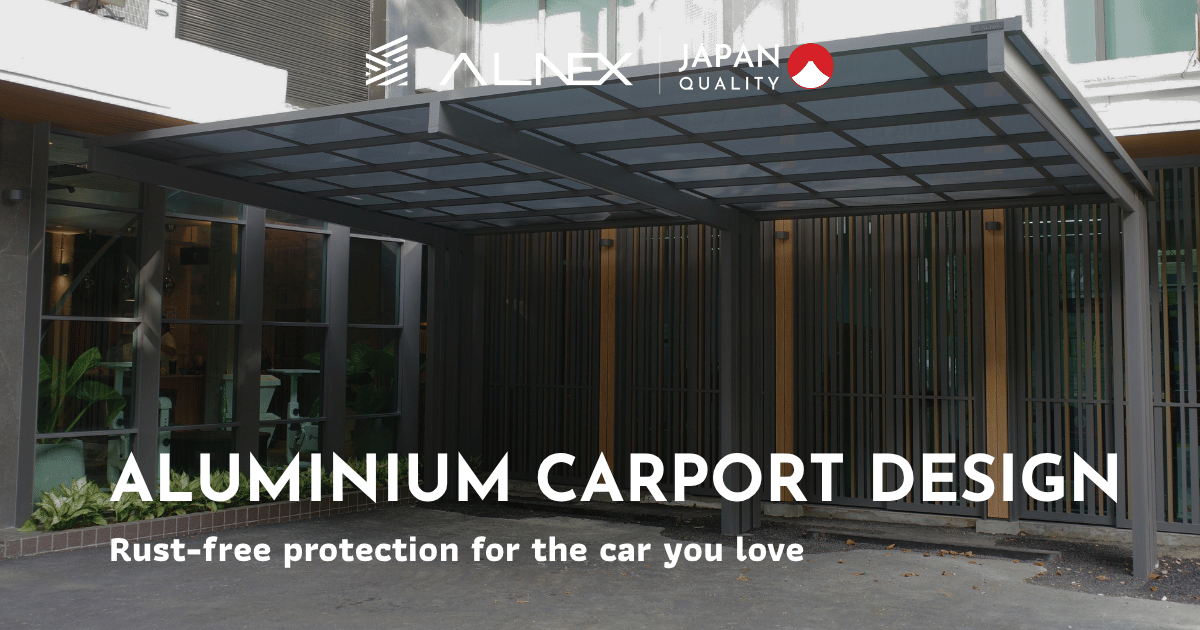
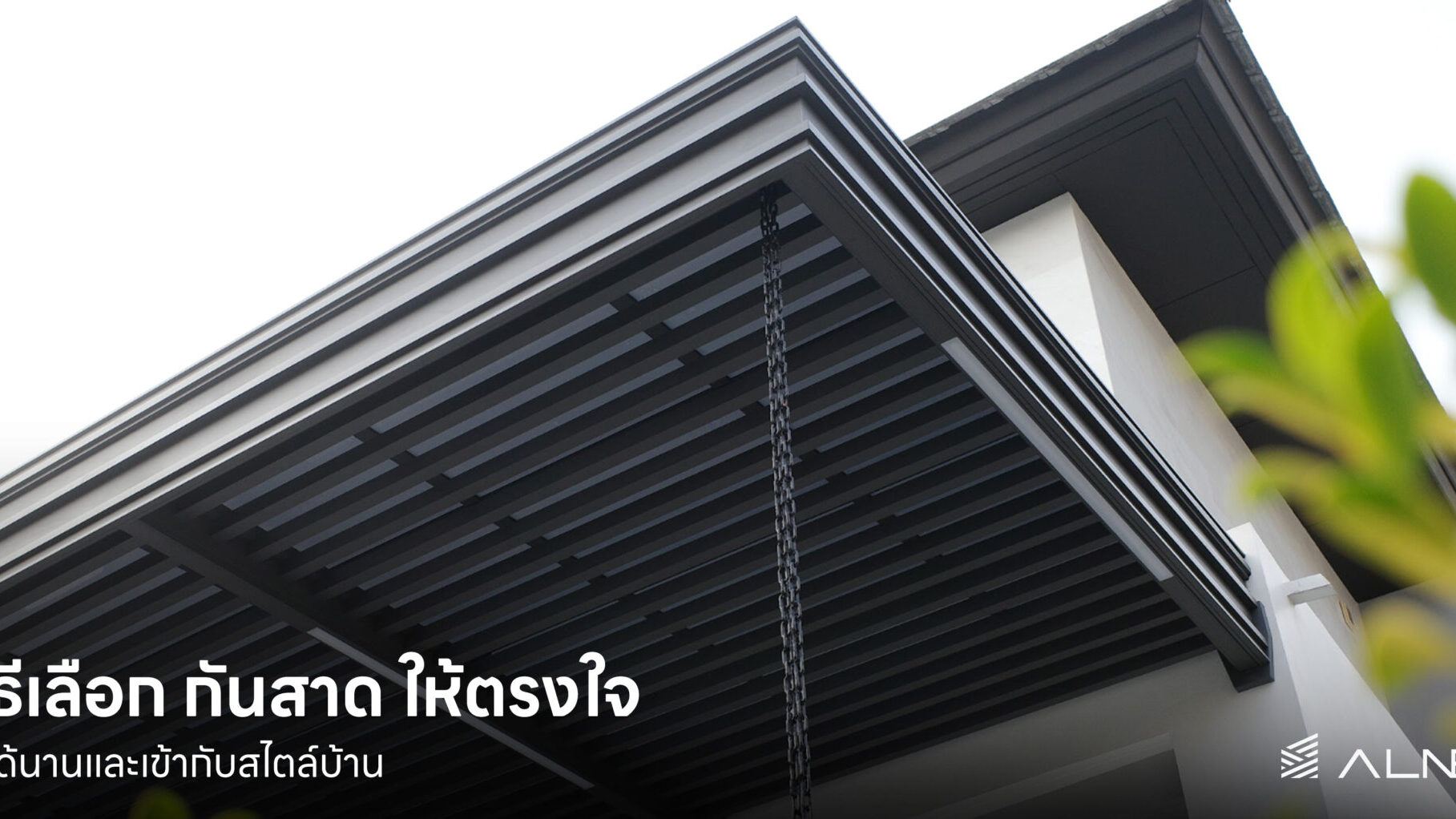
An aluminium carport is more than a place to park. In Thailand’s climate of intense sun and heavy monsoon rain, it is the shelter that protects one of a household’s most valued assets every single day. Yet not all carports are built to last through years of that weather. This guide explains why it suits the Thai climate, how it compares to steel and prefab options, and what shapes a design that fits your home.
Why a carport matters in Thailand’s climate
Thailand is one of the harshest environments for a parked car. Strong sun nearly all year fades paint and cracks rubber and plastic trim, while frequent rain and coastal salt air accelerate corrosion. A car left exposed ages faster than it should, and the interior heat soak makes every trip start uncomfortably. A well-built carport shields the car from all of this, protecting its value and comfort, which is why the structure and material behind it are worth choosing carefully.
Why aluminium 6063-T6 makes a better carport
What decides how long a carport protects a car is the structural material. ALNEX uses automotive-grade aluminium 6063-T6, which is around 50% stronger than ordinary aluminium and three times lighter than steel. The key advantage is that aluminium does not rust by nature, unlike a steel frame that needs repeated anti-rust painting and can corrode at the joints under Thailand’s rain and salt air. Because the frame does not degrade, the carport keeps protecting the car with almost no maintenance. This aluminium is also a low-carbon Green Billet from Thai Metal, a manufacturer that helps cut CO₂ emissions by roughly 270,000 tonnes per year.
HEATBLOX: keeping the car cooler underneath
Blocking rain is only half the job, because some roofs still trap heat and radiate it down onto the car. ALNEX uses HEATBLOX roofing panels that reduce the heat beneath the roof by around 15°C and block up to 90% of UV rays. The result is a car that stays cooler, an interior that ages more slowly, and none of the oven-like heat of parking in the open. The panels also come in several colour tones so the carport suits the home’s architecture rather than looking like an add-on.
Aluminium vs steel vs prefab carport
The table below compares the common carport options so you can see how each performs and lasts in the Thai climate.
Aspect
Aluminium 6063-T6 (ALNEX)
Steel frame
Budget prefab
Rust
Rust-free by nature
Rusts, needs repainting
Often corrodes at joints
Weight
About 3x lighter than steel
Heavy, larger footings
Light but limited strength
Heat under roof
Around 15°C lower with HEATBLOX
Depends on roofing chosen
Often traps high heat
Fit to the home
Designed per house
Possible but limited
Fixed sizes, little choice
Warranty
10-year paint + 2-year install
Varies by contractor
Often short or none
Designing an aluminium carport that fits the home
A carport is seen alongside the gate and the house every day, so it should belong to the architecture rather than sit beside it. ALNEX offers several design series, from clean Modern lines to more classic forms, sized for a single car up to several, and each project is surveyed, designed, produced and installed for that specific home. Where a clean, open look is wanted, a carport can be designed to minimise front columns, though the span and structure are always assessed on site so the result is safe and dependable rather than a promise made in advance.
Craftsmanship and warranty behind the carport
What separates a premium carport from ordinary work is the detail you don’t see. Guided by the Japanese philosophy of Kodawari, uncompromising attention to detail, ALNEX builds with weld-free structures, concealed bolts and screws, stainless steel fixings throughout, and EDP-coated reinforcement to reduce rust risk at the joints, with built-in lighting and Smart Home connectivity available. That care is backed by a 10-year standard paint warranty (against peeling, flaking and detachment) alongside a 2-year installation warranty. See the range on our carports and pavilions page, view real installations in our completed projects, or protect other areas with a matching aluminium canopy.
Frequently asked questions about aluminium carports
Does an aluminium carport really reduce heat in the car?
Yes. HEATBLOX roofing panels cut the heat beneath the roof by around 15°C and block up to 90% of UV, so a car parked underneath stays cooler and its interior ages more slowly than one left in the open.
Is aluminium better than steel for a carport in Thailand?
Aluminium 6063-T6 does not rust by nature, so it suits Thailand’s rain and salt air better than steel, which needs repeated anti-rust painting and can corrode at the joints.
Can a carport be built without centre columns?
It can be designed with fewer front columns for an open look, depending on the span and site. The structure is always assessed from an on-site survey first so it remains safe and reliable.
How much maintenance does an aluminium carport need?
Very little. Because the aluminium does not rust and the fixings are concealed and corrosion-resistant, routine cleaning is usually enough to keep it looking sharp for years.
Conclusion
An aluminium carport is a structure built for Thailand’s sun and monsoon. With rust-free 6063-T6 aluminium, HEATBLOX panels that cut heat and UV, and Kodawari craftsmanship in every joint, it protects a car from the weather that quietly wears it down, while a design tailored to the home makes the shelter part of the architecture rather than an afterthought.